
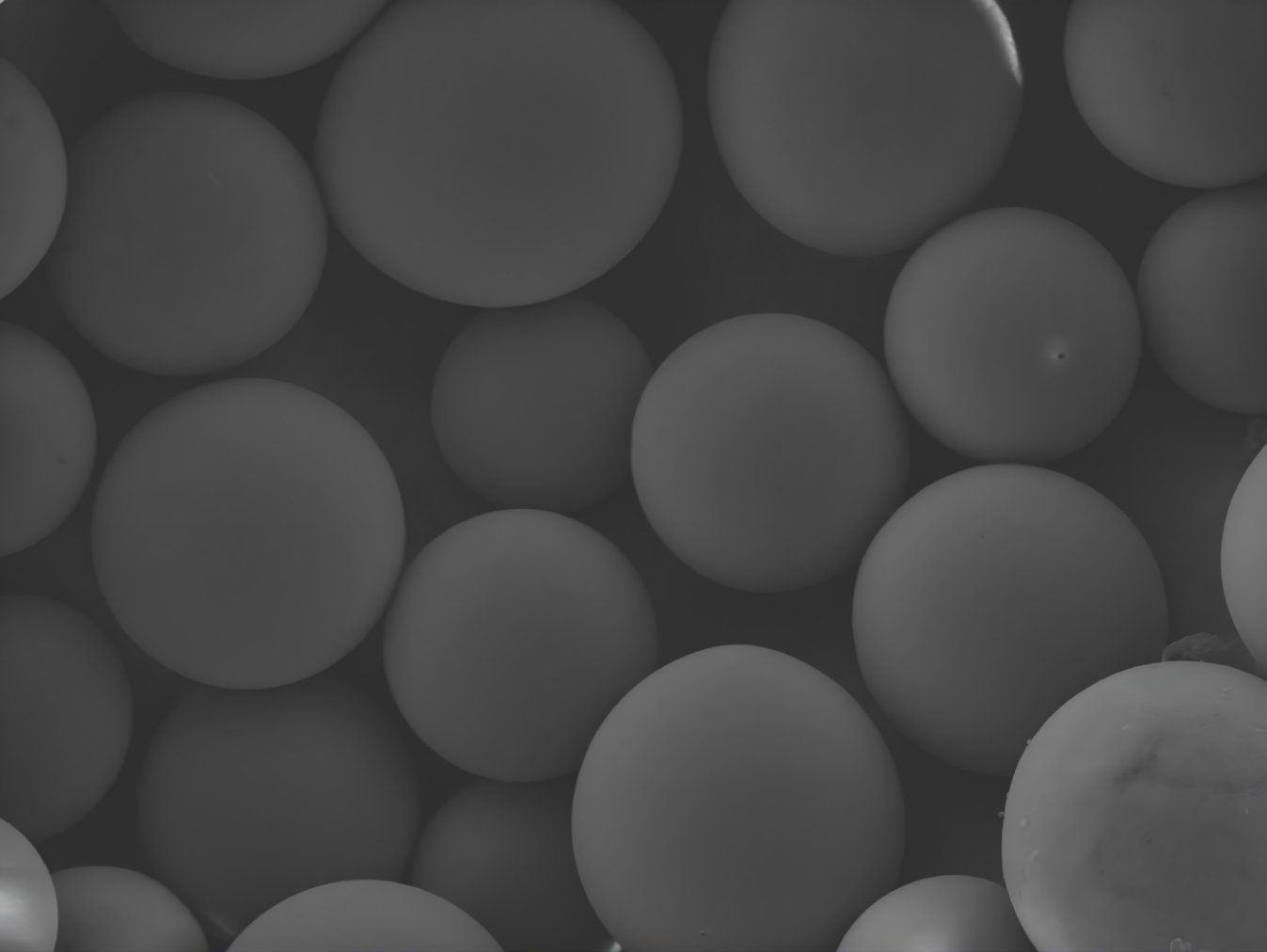
Poly-L-lactic acid (PLLA) microspheres
Introduction
Poly(L-lactic acid) (PLLA) Microspheres refer to PLLA in microsphere form. Their mechanism of action involves the hydrolytic degradation of PLLA in the skin, producing L-lactic acid—a naturally occurring substance in the body that is highly safe and ultimately metabolized into carbon dioxide and water. L-lactic acid interacts with dermal fibroblasts, stimulating the production of type III and type I collagen.Product Details
Product Name | Poly-L-lactic acid (PLLA) microspheres | |
Test Items | Method | Test Requirement |
Inherent Viscosity | Chloroform , 25°C | 0.5–1.5 dL/g |
Moisture Content | Karl Fischer Titration | ≤0.5% |
Particle Size Specification |
Laser Particle Size Analyzer | ≤20μm; 20μm~50μm; 50μm~80μm。 |
Particle Size | Laser Particle Size Analyzer | ≤0.5 |
※ If the product you need is not listed in the table above, please contact us for customization.
Function Overview:
Stimulates Collagen Production:
After subcutaneous injection, PLLA microspheres are absorbed by the body, releasing poly-L-lactic acid, which stimulates collagen production in the skin, thereby improving skin elasticity and firmness.
Wrinkle Filling:
Due to the size and shape of PLLA microspheres, they can be used to fill facial wrinkles and smooth uneven skin texture, making the skin appear smoother.
Long-Lasting Effects:
Unlike conventional fillers, PLLA microspheres stimulate collagen production, resulting in longer-lasting effects, typically lasting from several months to several years, offering durable aesthetic benefits.
Product Advantages:

Contact number: 0755-26920180
Mailbox:microsmed@outlook.com
401A, Building 5, Area A, Guanlan Hongrongyuan Hongchuang Technology Center, Longhua District, Shenzhen

 English
 中文
中文