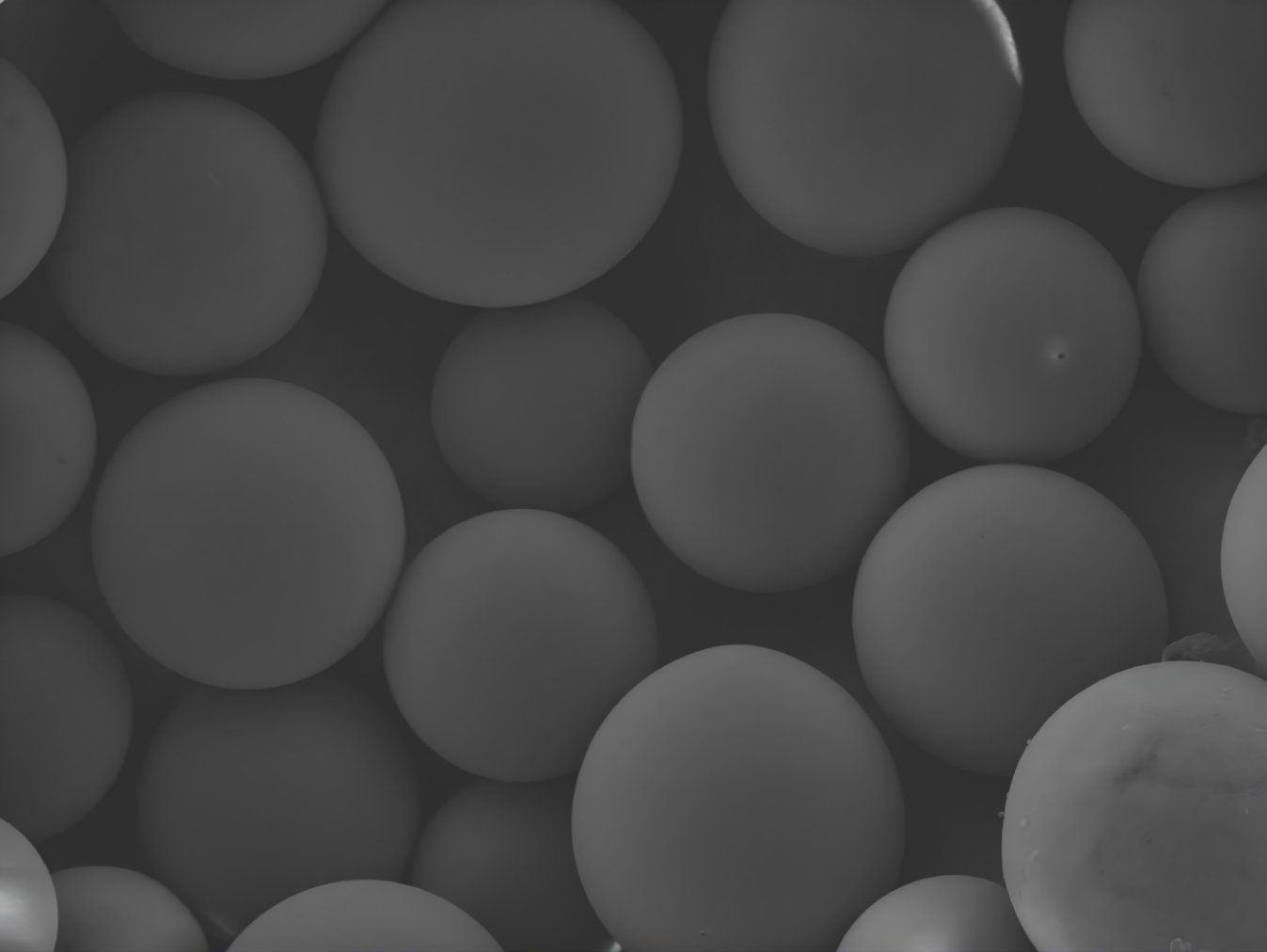
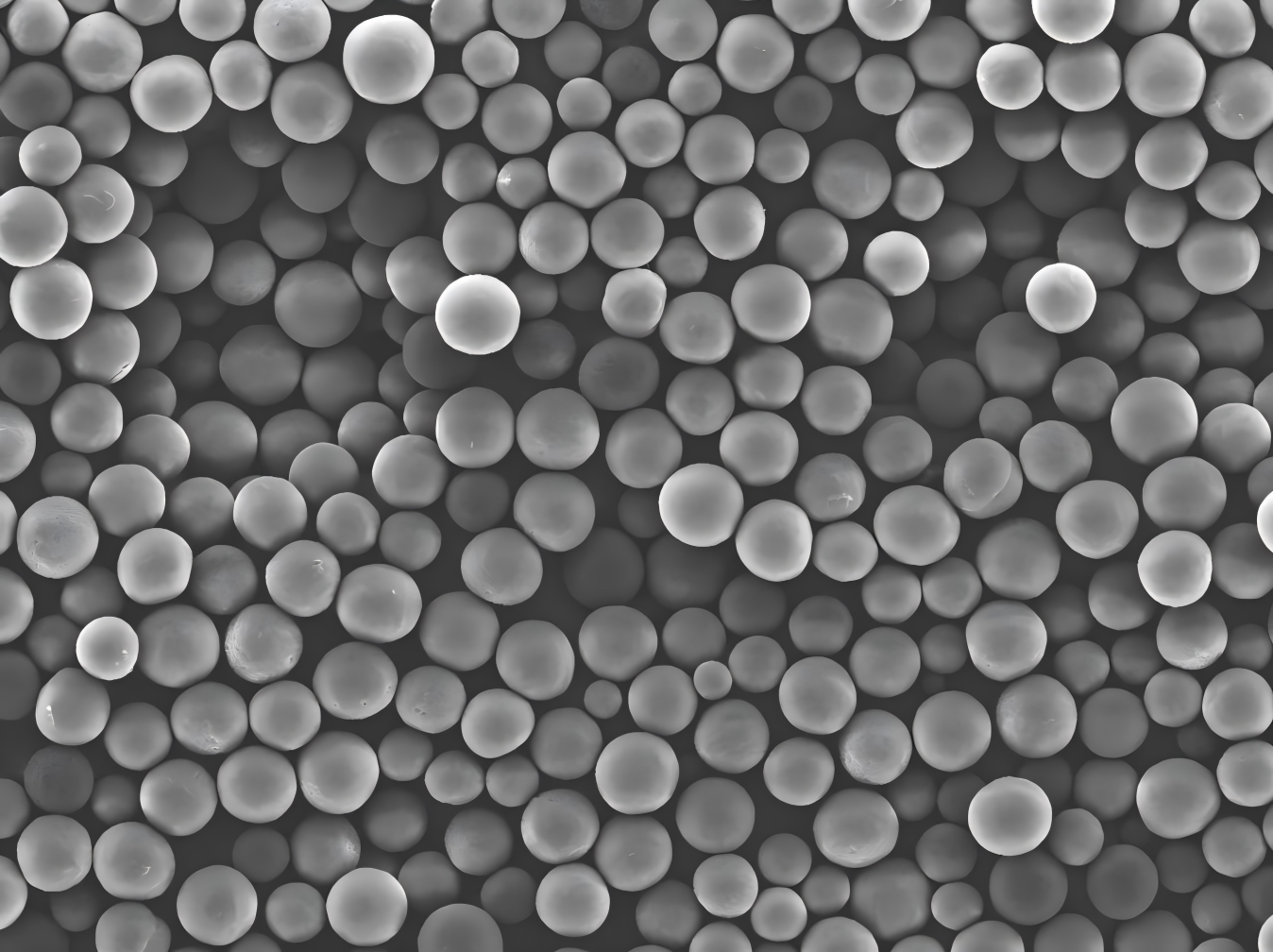
Biodegradable Polymer Microspheres
Introduction
Compared with traditional synthetic polymers, biodegradable polymer microspheres offer biodegradability and excellent biocompatibility, demonstrating significant value in aesthetic medicine, regenerative medicine, and drug delivery applications.Detailed introduction
We currently offer biodegradable polymer microspheres made from two materials: poly-L-lactic acid (PLLA) and polycaprolactone (PCL), available in particle size ranges of ≤20 μm, 20–50 μm, and 50–80 μm. Both molecular weight and particle size can be customized upon request.
PLLA microspheres degrade in the body primarily through hydrolysis and enzymatic degradation. High-molecular-weight PLLA microspheres generally degrade more slowly, whereas low-molecular-weight PLLA microspheres degrade faster due to their shorter polymer chains, which are more readily broken down. In contrast, PCL microspheres are more hydrophobic, making it difficult for water molecules to penetrate the polymer matrix. Consequently, even low-molecular-weight PCL degrades more slowly than PLLA.
In practical applications, the in vivo degradation rate can be precisely controlled by adjusting the molecular weights of PLLA and PCL microspheres. Compared with PCL microspheres, PLLA microspheres exhibit higher mechanical strength. Overall, both PLLA and PCL microspheres offer distinct advantages, and the choice between them depends on specific application requirements. For instance, PCL microspheres may be more suitable for long-term drug delivery, while PLLA microspheres may be preferable in applications requiring higher mechanical performance, such as scaffold materials.


Contact number: 0755-26920180
Mailbox:microsmed@outlook.com
401A, Building 5, Area A, Guanlan Hongrongyuan Hongchuang Technology Center, Longhua District, Shenzhen

 English
 中文
中文